Friday, September 14, 2007
Darkmans to be Published in the US
Nicola Barker's Man Booker Prize-nominated novel Darkmans will be published in the US in January, Publishers Weekly announced today. That leaves Animal's People as the only shortlisted title not available to American readers; US rights for that novel are currently on the auction block, and we should know a publication date soon.--David E


Thursday, September 13, 2007
Falling Up
I'm sure the critics are salivating over this news. To make it even better, Frey is already the author of How to Write a Damn Good Novel. Oh, the irony.--David E
Wednesday, September 12, 2007
Booker Prize Roundup: Bonus Edition
The Guardian has posted a quick overview of this year's Man Booker Prize shortlist nominees. The parodic summaries are distilled from the paper's ongoing feature, "The Digested Read," which--as I've mentioned earlier--is extremely useful for folks (like me) who want to be opinionated, but don't have the time to read everything coming down the pike.
The Guardian has also posted a very useful Booker Prize page with links to their own reviews, other papers' reviews, and author interviews.--David E
The Guardian has also posted a very useful Booker Prize page with links to their own reviews, other papers' reviews, and author interviews.--David E
Tuesday, September 11, 2007
Last Chance
In the back of the store are two shelves of bargain books. They're not listed in our inventory, so you can't buy them online. You can only get these deals by coming into the store. These are titles that have been around too long or we have too many copies.
We often have some real gems on sale. Today on the same shelf I found
We often have some real gems on sale. Today on the same shelf I found
- Kids by Mario Testino
- Volunteer Slavery by Jill Nelson
- Rumpole a la Carte by John Mortimer, and
- Murder in the Central Committee by Manuel Vazquez Montalban
In the Long Run
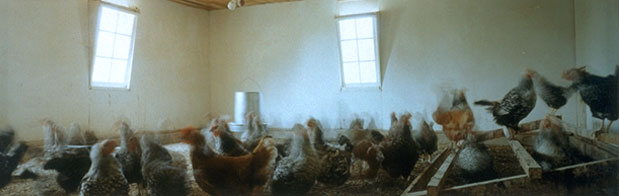
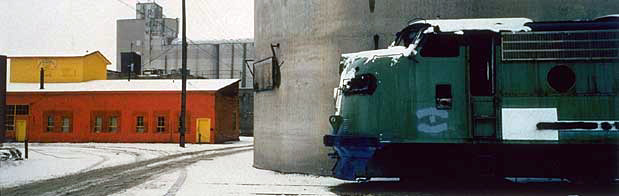
 We have a couple copies of Nocturnes, the new collection of photographs by St Paul's Chris Faust. Thing is, they're still in their shrinkwrapping, so I can't flip through them. Would one of you customers please come in and ask to see the photos, so we have an excuse to open one of these books?
Here are a couple of Faust's photographs to whet your appetite.--David E
Monday, September 10, 2007
Wisconsin Is The Wackiest State, I Swear
 It used to be a manure tank in central Wisconsin. Now, all cleaned up, it's a bookstore. And not just any bookstore, but a real castle, with a moat and everything.
Read the whole article here. It'll make you want to plan a trip to the Badger State.--David E
Sunday, September 9, 2007
Booker Prize Roundup: The Reluctant Fundamentalist
 This one is the Post-9/11 South Asian Allegorical One.
 The protaganist is Changez; his girlfriend is Erica. When, after September 11, America changes (ummm... Erica... Changez... get it?) our anti-hero becomes the reluctant fundamentalist of the title. The novel is a single evening's monologue, as Changez recounts his tale to a traveler visiting Pakistan.
Good review: The Village Voice: "brief, charming, and quietly furious"
Not so good review: The Guardian: "slightly abstracted, thin-blooded"
Saturday, September 8, 2007
Booker Prize Roundup: Mister Pip
 Shorthand for this one: The Favorite. (Alternative shorthand: The White-Man-Teaches-The-Unwashed- To-Love-Literature Book)
Mister Pip is set on the South Pacific island of Bougainville in the early 90s. As rebels approach and the white folks flee, only "Pop Eye" Watts remains to teach the local students using the only book he can find, Dickens' Great Expectations.
The knock on the book is that its theme is a bit too old-school British Empire. "Mister Pip contains a suspicious streak of paternalism throughout," says The Onion. "It invites sentiment yet gently mocks readers by exaggerating its own tropical colour," reassures The Australian.
Regardless, according to the UK gambling conglomerate William Hill, MP is the easy favorite to win this year's Man Booker Prize. It's listed at 2:1, ahead of Ian McEwan's On Chesil Beach, lagging behind at 5:2.--David E
Booker Prize Roundup: On Chesil Beach
 Ian McEwan's On Chesil Beach was the bookie's favorite when the longlist for the Booker Prize was announced, but with the release of the shortlist that honor has moved to Mister Pip.
On Chesil Beach is the Establishment Choice in this year's nominees. McEwan has been longlisted five times; he won 1998's prize for his novel Amsterdam. Only Peter Carey and JM Coetzee have won the Man Booker Prize twice.
The novel itself is the story of two virgins whose disappointing first night as husband and wife prompts much discussion about love, sex, and even social class. Critical response has been good from the book's publication.--David E
Friday, September 7, 2007
File Under "Geek"
In an effort to post something that's not Booker Prize-related, I'll point you towards this list of the "Top 25 Librarian Bloggers." It's got four metrics, an explanation methodology... there's probably more, but I dozed off at that point.
I have to wonder if there aren't only about 30 librarian bloggers out there. How else do you explain number nine, Fililipino Librarian. Their slogan is "For those interested in knowing more about the Philippines, Filipiniana, Philippine libraries and Filipino librarians." A worthy cause, no doubt, but it's the world's ninth most popular librarian blog?--David E
I have to wonder if there aren't only about 30 librarian bloggers out there. How else do you explain number nine, Fililipino Librarian. Their slogan is "For those interested in knowing more about the Philippines, Filipiniana, Philippine libraries and Filipino librarians." A worthy cause, no doubt, but it's the world's ninth most popular librarian blog?--David E
Booker Prize Roundup: The Gathering
Among this years Man Booker Prize shortlist, Anne Enright's novel The Gathering can be summed up as The Irish One. But hers is not a land filled with alcoholic fathers and penny whistles. "Anne Enright, born in Dublin in 1962, gives us an Irish fiction that leads out of tradition into something zestily new," says the Telegraph. That seems to mean sardonic observations such as this one: "Emily is a bit of a cat and cats, I always think, only jump into your lap to check if you are cold enough, yet, to eat."
The Gathering is the story of Veronica Hegarty, who is drawn back into her sprawling Dublin clan's orbit following the death of her brother Liam. Familiarity ensues.
As appears to be the case with Nicola Barker's Darkmans (see my posting here), the emphasis in Enright's novel is on the writing more than on the plot. The Independent called it "slight in storyline, perhaps, but prodigious in the telling." Or as the reviewer in the Guardian said more obliquely, "She has uncovered the truth that sometimes our great adventures are interior." (Personally, I found the Guardian's Booker Club blog entry to be more opinionated and therefore more useful.)--David E
The Gathering is the story of Veronica Hegarty, who is drawn back into her sprawling Dublin clan's orbit following the death of her brother Liam. Familiarity ensues.
As appears to be the case with Nicola Barker's Darkmans (see my posting here), the emphasis in Enright's novel is on the writing more than on the plot. The Independent called it "slight in storyline, perhaps, but prodigious in the telling." Or as the reviewer in the Guardian said more obliquely, "She has uncovered the truth that sometimes our great adventures are interior." (Personally, I found the Guardian's Booker Club blog entry to be more opinionated and therefore more useful.)--David E
Booker Prize Roundup: Darkmans
Nicola Barker's novel Darklands is set in the town of Ashford in Kent, where the town's citizens are beset by the apparition of John Scogin, Edward IV’s court jester. Over several days and 840 pages, Scogin prompts each of the main characters to his or her own special madness. One rolls in the muddy seashore; another builds a model cathedral out of matchsticks.
Reviewers agree that plot is not the draw in this book. "[H]undreds of pages pass with little or no dramatic incident," says the Independent. No, you read this book for its language. One character is "easy as a greased nipple (and pretty much as moral)." Another is "Jabba the Hut with a womb, chronic asthma and a council flat."
The Guardian loved "this wonderful contrary sprawl of a novel." The Times was less thrilled with the book, though even that reviewer calls it "inventive, witty and well staged." The Independent was somewhere in between, praising the novel's "fearsome energy."
An American edition of Darkmans hasn't been announced yet, so we won't be able to judge for ourselves for a while yet.--David E
Reviewers agree that plot is not the draw in this book. "[H]undreds of pages pass with little or no dramatic incident," says the Independent. No, you read this book for its language. One character is "easy as a greased nipple (and pretty much as moral)." Another is "Jabba the Hut with a womb, chronic asthma and a council flat."
The Guardian loved "this wonderful contrary sprawl of a novel." The Times was less thrilled with the book, though even that reviewer calls it "inventive, witty and well staged." The Independent was somewhere in between, praising the novel's "fearsome energy."
An American edition of Darkmans hasn't been announced yet, so we won't be able to judge for ourselves for a while yet.--David E
Thursday, September 6, 2007
Booker Prize Roundup: Animal's People
Of all the books on this year's Booker shortlist, the least familiar to me is Indra Sinha's Animal's People. It turns out to be a novel drawn from the author's own experiences in the aftermath of the Bhopal Union Carbide gas tragedy of 1984 (for information, click here).
Sindha founded the Bhopal Medical Appeal (bhopal.org) in 1994, and his novel is drawn from the stories of the people he met. The title's Animal is in fact a man, scarred and bent double since the events of "That Night." When the book opens Animal says, "I used to be human once." By its end, his people have helped him learn to find his humanity once again. The Indian Express called his story "a novel so honest that it leaves you gasping for breath."
There's been no announcement of an American edition of Animal's People as yet. Excerpts are available on Sinha's website.--David E
Sindha founded the Bhopal Medical Appeal (bhopal.org) in 1994, and his novel is drawn from the stories of the people he met. The title's Animal is in fact a man, scarred and bent double since the events of "That Night." When the book opens Animal says, "I used to be human once." By its end, his people have helped him learn to find his humanity once again. The Indian Express called his story "a novel so honest that it leaves you gasping for breath."
There's been no announcement of an American edition of Animal's People as yet. Excerpts are available on Sinha's website.--David E
Man, Oh Man
The shortlist for this year's Man Booker Prize has been announced. Among the final six are some you'd expect to see and a few I've never heard of. I'll do some digging in the next few days and try to get some details on the lesser known titles.
The winner of the Man Booker Prize will be announced on October 16.--David E
- Darkmans by Nicola Barker (Fourth Estate)
- The Gathering by Anne Enright (Jonathan Cape)
- The Reluctant Fundamentalist by Mohsin Hamid (Hamish Hamilton)
- Mister Pip by Lloyd Jones (John Murray)
- On Chesil Beach by Ian McEwan (Jonathan Cape)
- Animal’s People by Indra Sinha (Simon & Schuster)
The winner of the Man Booker Prize will be announced on October 16.--David E
Book with a Beer Chaser
 There's still time for you to get ready for next week's installment of our lubricated reading group Books & Bars. Join us Tuesday night (the 11th) at Bryant Lake Bowl (map) for conversation and a beverage with some very interesting folks. Doors open at 6:00pm for socializing; discussion begins in earnest at 7:00pm.
September's book is Theft by Peter Carey. It's the story of two brothers, one a painter and the other a childlike innocent, who are set about to steal paintings from the father-in-law of a beautiful stranger. John Updike said of the novel in The New Yorker, "Peter Carey is a superb writer, whose prose is always active, and who infuses his characters, however eccentric, with a warmth that lets them live in our minds."
Books & Bars is not your typical book club. We provide an atmosphere for lively discussion of interesting authors, good food and drinks. You're welcome to come even if you haven't read the book.
Wednesday, September 5, 2007
Mandatory Plaid Shirt

Tuesday, September 4, 2007
Turning Japanese
 Donald Richie has written an article about Boy, a book of three short stories by Japanese actor/director Kitano "Beat" Takeshi. You might know Takeshi as the host of the cult hit TV show Most Extreme Elimination Challenge, but he's also a serious actor. His most famous move is the great Hana-bi (Fireworks). Richie's article discusses not only that movie, but many others, drawing together themes from both the book and the movies, and giving a fascinating glimpse into Takeshi's filmmaking.--David E
Sunday, September 2, 2007
The End
 When Ian Rankin's best-known character, the crusty Edinburgh cop John Rebus, debuted in 1987's Knots and Crosses, he was forty years old. He's been aging in the novels right along with the rest of the world, and he's now sixty and approaching mandatory retirement. Seventeen books later, Rankin has announced that the next Rebus novel, Exit Music, will indeed be the last one.
 You can read a review of the novel here, but that's all. No publication date has been announced yet for a US edition. If you're desperate for closure, you'll have to get it from across the pond.--David E
Among the Barbarians
 Who would have thunk that New York magazine, home of the Model Manual and Party Lines, would also boast a great series of excerpts from graphic novels? But they do. Their Comics Page features some really interesting grown-up work--stuff you don't have to be embarrassed to read.
Right now they're showing Jake Myler's American manga Undertown. And if after that you accidentally read something about Leona Helmsley's dog, who can blame you?--David E
Saturday, September 1, 2007
What Might Have Been
 Author and renowned curmudgeon VS Naipaul is one of the most prolific writers around. But it wasn't a sure thing. Early in his career, Naipaul was looking at other options. He tells the Scotsman:
"I would have liked to work for a big company in India. I did apply, but didn't get it. To get those jobs you had to be well-connected locally. It was a giant corporation. They made matches."
So he kept on writing, and the fire-making industry's loss is literature's gain.--David E
Subscribe to:
Posts (Atom)